
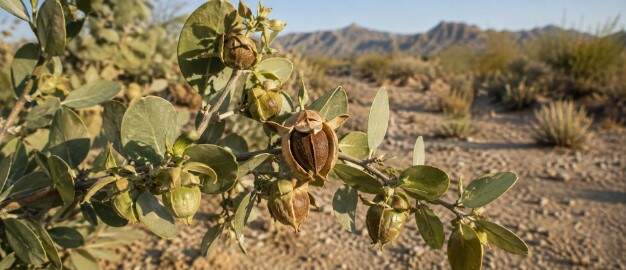
Long before jojoba made its way into modern beauty products, Indigenous communities were using it to protect their skin from one of North America’s harshest environments.
It softened and protected skin exposed to intense sun, dry air, and wind. Jojoba was also used for burns and wound care. During times of severe hardship, people ate the seeds raw or roasted and even brewed them into a coffee-like drink.
Native to the Sonoran Desert of Mexico and the southwestern U.S., jojoba (Simmondsia chinensis) is built for extremes. The hardy shrub thrives in intense heat with very little water. Its thick, waxy leaves limit water loss, while deep roots seek out moisture underground. Among the Comcaac people of coastal Sonora, jojoba is known as haat.
Its use in Baja California was documented as early as 1789, when historian Francisco Javier Clavijero described Indigenous communities using jojoba for food and wound care.
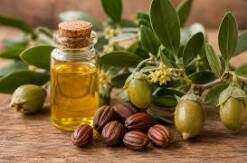 About half of each jojoba seed is made up of the substance we call jojoba oil. Despite the name, it’s actually a liquid wax that closely resembles our skin’s natural sebum. That similarity makes jojoba especially effective at supporting the skin’s natural barrier.
Jojoba also contains vitamin E and antioxidant compounds that help combat inflammation and oxidative stress. Research suggests it can support collagen formation and skin elasticity and help soothe sunburned skin.

Leave a Reply