
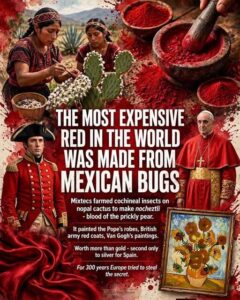
 The red that painted the entire world was invented in Mexico.
Before Mexico, the world had no real red. Europe had faded pinks. Muddy oranges. The ‘red’ faded after a few washes.
Then the Spanish arrived in Oaxaca and saw Mixtec women doing something insane. They were farming tiny white insects on nopal cactus. The insect is called cochineal. In Nahuatl: nocheztli — blood of the prickly pear.
When you crush it, it explodes into the most intense, perfect, blood-red color ever seen. 70,000 insects = 1 pound of dye. And the Mixtecs had been breeding them for 2,000 years.
The Spanish lost their minds. They knew this was worth more than gold. They made it Spain’s second biggest export — after silver.
All of Mexico’s cochineal had to be shipped through Oaxaca. It became so valuable that Spain kept the source a secret for 300 years. Europeans thought it was a seed. A flower. They had no idea it was a bug.
What did that Mexican red paint?
The Pope’s robes — that bright cardinal red? Cochineal from Oaxaca.
British Army Red Coats — the reason they were called Red Coats? Mexican bugs.
The Mona Lisa’s reds — Raphael, Van Gogh, Rembrandt — all used cochineal.
The red carpet — literally made possible by Mixtec farmers.
Your Starbucks Strawberry Frappuccino — until 2012, still colored with cochineal. Still labeled “natural color.”
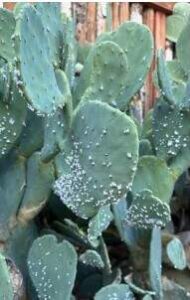 A tiny white bug on a cactus in Oaxaca clothed kings, popes, and armies.
It still exists. In Oaxaca, families still farm cochineal on nopal exactly like their great-great-grandparents.
Next time you see red, ask yourself: where did that red come from?
From a Mexican cactus. From Mixtec hands.
Leave a Reply