
 fifth member sits atop the pole, performing a ceremonial dance and song with a flute and small drum.
The UNESCO-recognized tradition can be traced back to Tajín, an archaeological site that once served as the capital of the Totonac Mesoamericans from A.D. 800. Today, it is one of Mexico’s most celebrated and active Indigenous rituals, known as the “Danza de los Voladores,” or “Dance of the Flyers.”
Interestingly, the Totonac did not invent the dance — that was likely the Nahua of Central Mexico — but they have preserved it, inextricably linking the practice to their history and culture in the process.
Ancient traditions in the modern world
These airborne avatars of the Totonac people are native to the northern region of Veracruz, where the modern Pueblo Mágico of Papantla can be found, roughly four hours northeast of Mexico City. They are famed throughout the country, with representatives performing their millennia-old routine in tourist centers such as Mexico City’s Bosque de Chapultepec and Xcaret Park in Playa del Carmen.
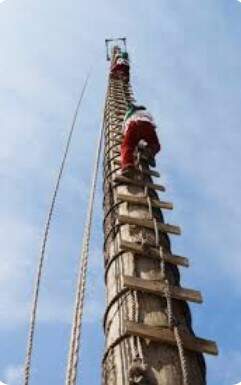
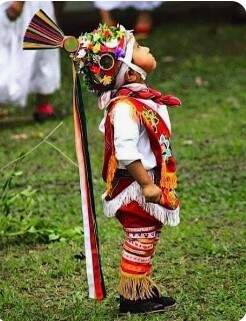
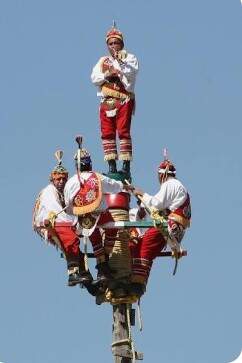
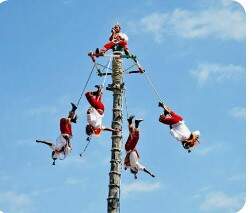
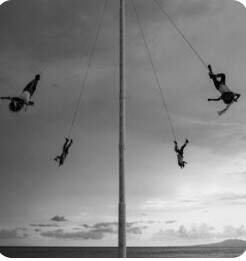
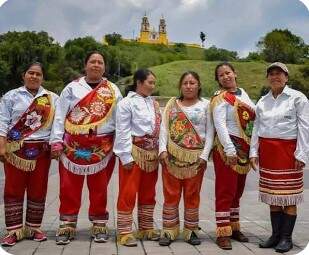
And yet, as impressive and fun as the voladores are on a sweltering summer day, the region has also gifted Mexico, and the world, even more than its high-flying customs: Papantla is the global cradle and origin of vanilla.
‘The city that perfumed the world’

Papantla, a town of 55,452 inhabitants according to national census data, was once the global leader in vanilla exports. From 1870 to 1910, the modest pueblo in Veracruz state — located on steep, labyrinthine roads in the middle of a tropical forest — became the epicenter for vanilla, one of the most expensive spices in the global market. Much of it was exported to Europe and the United States, and the region was dubbed “the city that perfumed the world” for the sweet, refreshing scent that vanilla emits.
 dominates, and the market value of small-batch vanilla bean production from Papantla is nowhere near what it once was.
The rise and fall of the vanilla trade
Historical documents reveal that vanilla cultivation dates back to the Totonac peoples, who gathered the fruit of orchid plants in surrounding areas before any other known society. Writing in her journal article “The History and Ecology of Vanilla,” Dr. Mariana Hernández Apolinar, a biologist and faculty member in UNAM’s science department, notes that for more than 200 years, “Mexico was the world’s only supplier of vanilla, bringing the country considerable profit.”
That declined in the mid-19th century when Europeans intervened. According to Hernández Apolinar, “it was discovered that vanilla flowers could be fertilized manually. This made it possible to produce the fruit on plantations outside its natural area and led to intensive vanilla cultivation in different tropical regions, making its production intensely commercial.”
Today, efforts to restore vanilla’s potential within the Mexican agricultural sector have been underway, including Papantla’s growing tourism sector.
Leave a Reply