
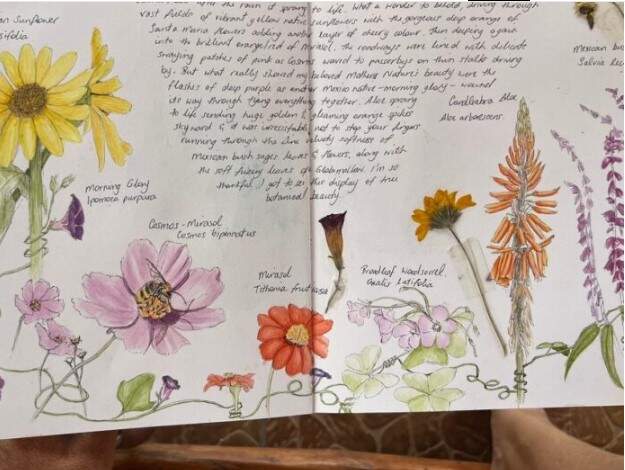
Mexico’s wildflowers astounded me … as if Mother Nature had rolled out the red carpet. Traveling through the central highlands in Querétaro and Guanajuato last September, the roadsides, fields and hillsides were covered in colorful blooms – entire mountainsides shone in a patchwork of vibrant yellows, oranges, reds and pinks. Yet, six months earlier, when I had passed through, the same mountainsides were dry, arid and sparse.
However, in September, an entirely different ecosystem lay before my eyes. So much so that I asked the driver to stop along the highway beneath the hillside of Mexican sunflowers. The blooms blanketed the landscape in a cheery yellow; he picked some for me after I shared that I was a botanical artist.
When to see the wildflowers
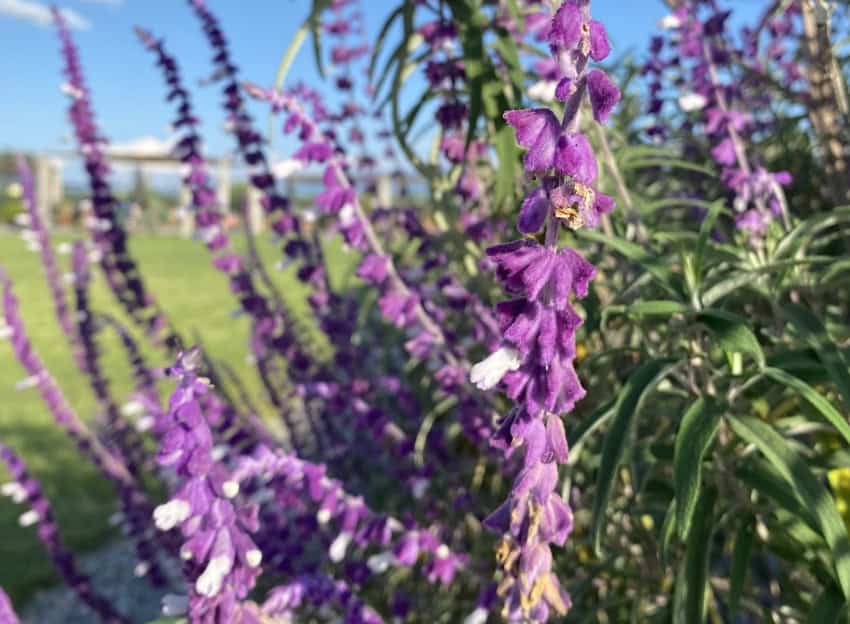 Mexican sage is easily identifiable thanks to its burst of color. (Bel Woodhouse)
There are two wildflower seasons in Mexico. The first is in spring, from March to May, when arid regions like Baja California and northern deserts bloom after winter rains. These winter rains cause super-blooms, where desert plants bloom en masse and carpet the landscape.
The second wildflower season is in autumn, from September to November, after the rainy season. Native plants put on a brilliant flowering display, bursting into bloom.
What flowers can you expect to see?
Cosmos, marigold, Mexican sunflowers, globe mallows, morning glory, salvias, mirasol and many more. From tiny butter daisy flowers blanketing the ground at your feet to the huge blooming shrubs of Mexican sunflowers looking you in the eye. There is a wide variety, from light happy yellows to deep striking purples.
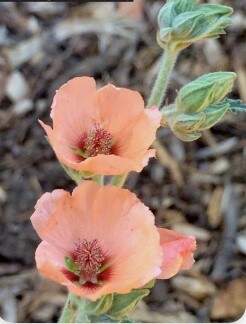
Some flowers were a surprise to me. Like the soft baby pink hues of globe mallows. Not a plant that I had seen before. So, seeing a big patch was quite the sight. Another surprise was massive patches of happy pink cosmos. A popular garden plant, grown for its flowers, it was delightful to find out it is native to Mexico.
Chicalote, or Mexican White Prickly Poppy
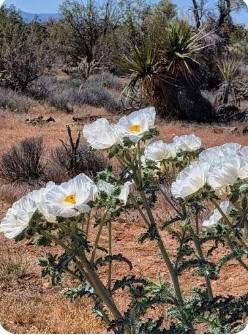
The Chicalote, a native white prickly poppy, won my heart. Its delicate papery petals shining under the sun were so dreamy and elegant that I painted one. The delicate white petals symbolize tranquility, peaceful dreams and quiet rest.
These white prickly poppy flowers stand for endurance and resilience, peace and sleep.
Because the spiny plant thrives in dry, harsh and disturbed soils where other plants fail, to many it represents the ability to survive tough conditions through deep inner strength.
Mirasol, or Cosmos
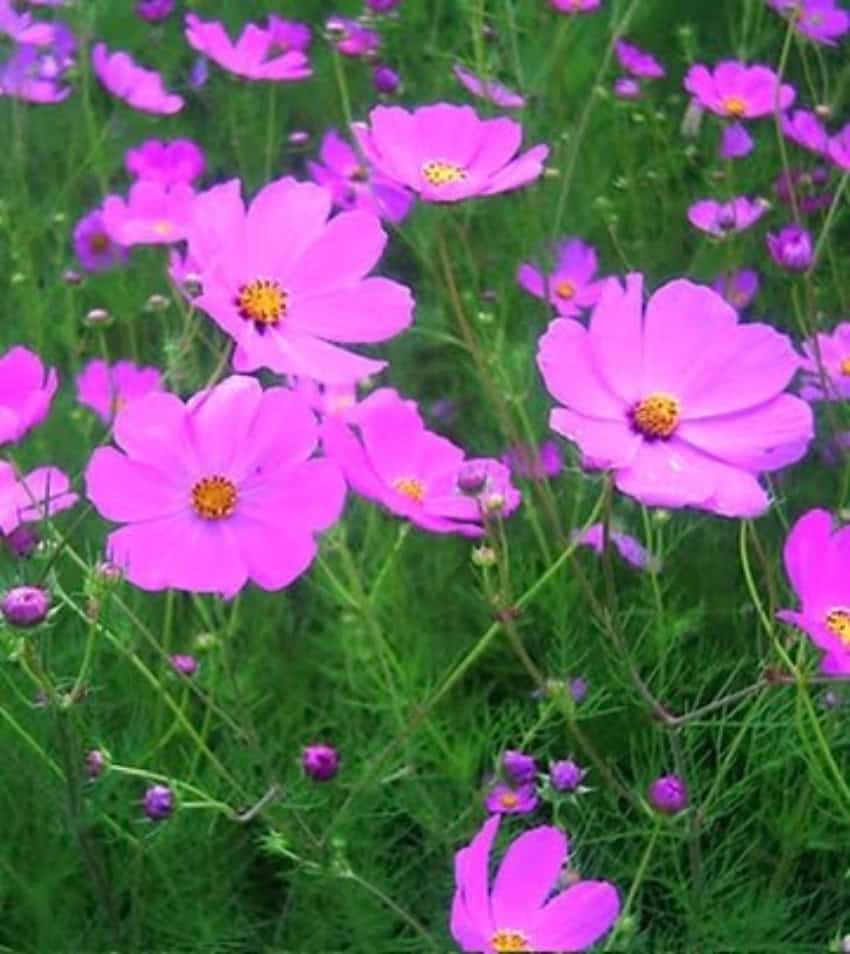 Mirasol is known for its vibrant pink hues. (Bel Woodhouse)
In a show-stopping display of vibrant pinks, cosmos put on quite a show. Huge patches waved to us along the roadside. Swaying on long feathery stalks as we passed. Another beautiful member of the daisy family, cosmos represents balance, peace and tranquility.
Also, cosmos is believed to act as a bridge between life and the afterlife, linking the physical world with the spiritual realm.
Girasol, or Mexican Sunflower
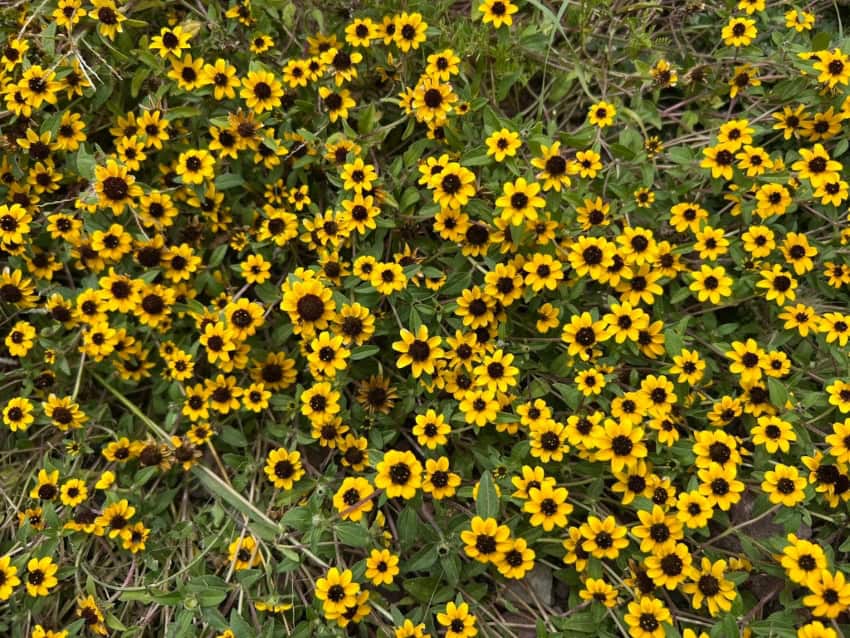 Entire mountainsides in Mexico are often covered in sunflowers. (Bel Woodhouse)
Entire fields and mountainsides radiated in cheery yellow everywhere I went. This member of the daisy family represents faith, loyalty, and adoration.
Some Indigenous populations associated the flower’s bright face with solar deities. Aztec and Mexica people treated the plant as sacred. Dried sunflower seeds were left as offerings at major ceremonial sites like the Templo Mayor in Mexico City.
Mexican Passionflower
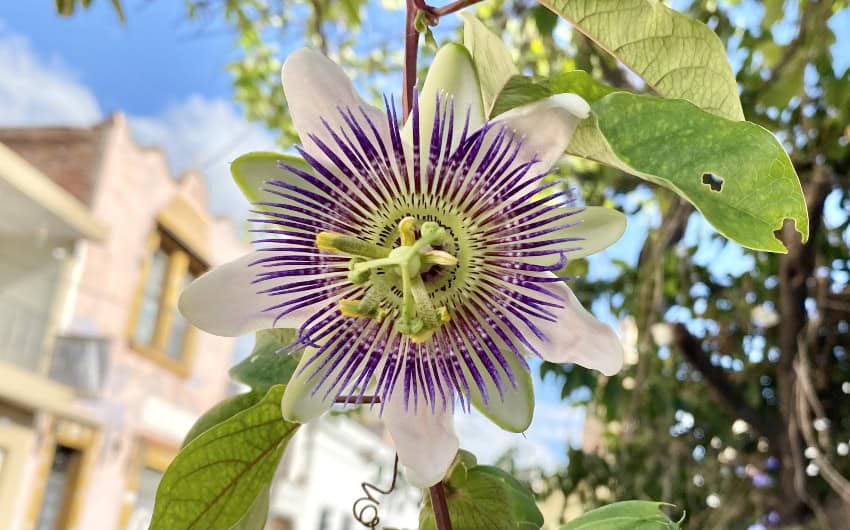 The Mexican passionflower is a striking sight. (Bel Woodhouse)
Walking the streets of Querétaro, Mexican Passionflowers were seen abundantly climbing trees or along old gates. This one was growing outside a church, which I found fitting, as they symbolize the Passion of Christ and the crucifixion.
The ten petals and sepals represent the faithful apostles, while the corona filaments (seen as the purple inner ring) represent the crown of thorns. Inside, the three stigmas represent the nails, and the five anthers represent Christ’s wounds.
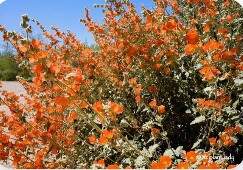
Copper Globe Mallow
New to me, this member of the hibiscus family had me stopping for a closer look. The soft baby pink petals are as delightful as the velvety feel of its leaves. Flourishing in dry, harsh desert heat, the flower symbolizes endurance and resilience. Also standing as powerful emblems of hope, gentle comfort and vitality.
Leave a Reply