
 How Maya Astronomers Predicted Celestial Events Far into the Future
The Dresden Codex
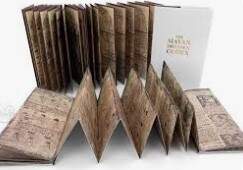 The most important surviving source for all things Maya astronomy and cosmology is the Dresden Codex, which comprises 39 pages of hieroglyphic text and illustrations, folded in a screen-fold format typical of Maya codices.
The codex itself is striking visually, with both the hieroglyphic text and illustrations rendered beautifully in color. Their understanding of science, governance, art, and cosmology was intertwined into a complex network of knowledge and ritual. But, as with all things Maya, it is important to keep in mind that, given the scarcity of primary sources, making such sweeping statements is likely an oversimplification.
Using this technique, the knowledge within the Dresden Codex can predict eclipses far into the then-distant future, as is the case with the total solar eclipse of July 11, 1991, visible over Mexico and Central America.
It’s important to note that this type of knowledge was available only to a select few, as reading codices required extensive specialized knowledge. One can certainly imagine the ruling class using this type of knowledge to their advantage by demanding more tribute, as if “the gods are not happy, the moon may consume the sun in the middle of the day and not spit it back out.”
Venus, the Rebel Star of Maya Astronomy
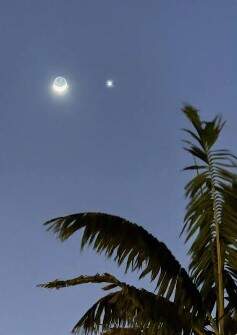 Of all the celestial bodies in the sky, other than the sun, Venus appears to have caught the attention of the Maya the most. This seems obvious, as Venus is so bright in the night sky, but aside from that, the Maya understood this planet (yes, the Maya understood it was a planet, not a star) as unique.
For starters, Venus rotates in a retrograde direction, which means that it spins clockwise, in the opposite direction of all other known planets in the solar system, save Uranus, which was unknown to astronomy until 1781. Venus also spins extremely slowly, taking 243 Earth days to complete one rotation, while its orbit of the Sun takes 225 days. This means a day on Venus is longer than its year.
For this reason, Venus held particular importance in Maya astronomy and religion, associated with warfare, ritual sacrifice, and lineage foundation. For example, the Venus table in the Dresden Codex depicts deities taking shots at one another during Venus’s stations, linking astronomical phenomena to mythological narratives.
During the Post-classical period, the Maya began constructing what we have come to call Venus platforms, which associate Venus and the Venusian calendar with the rain god Chaac. The most famous of these Venus platforms can be seen at Chichén Itzá, where it sits opposite the Temple of Kukulcán, right at the beginning of the Sacbé that links the ceremonial center with the Sacred Cenote, where Chaac was said to dwell.
Astronomically Aligned Architecture
The most famous examples of architecture aligned with astronomy include the Temple of the 7 Dolls in Dzibichaltún and the Temple of Kukulcán in Chichén Itzá, which, during the vernal and autumnal equinoxes, put on quite a show.
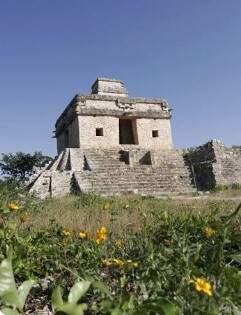
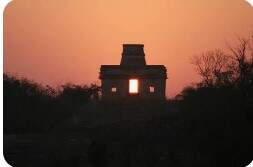
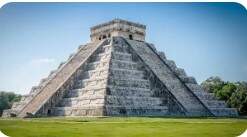
But the reality is that in one way or another, almost all Maya architecture is astronomically aligned for practical, religious, and political purposes. At its most basic form, monumental Maya architecture was built in alignment with the cardinal axes, depending on its purpose. The cardinal directions were each associated with specific colors, deities, and symbolic meanings. For example, the orientation of a structure facing east establishes a connection to ideas of rebirth, new beginnings, and the rising sun.
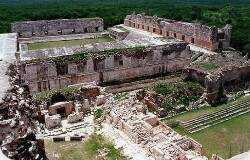
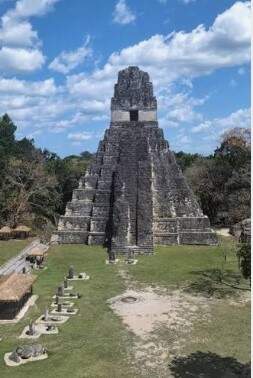
North-facing buildings consistently held privileged status in Maya urban planning. Good examples of these types of structures include the North Building of the Nunnery Quadrangle at Uxmal, where, upon an elevated platform, nobles oversaw rituals in the courtyard below. Another well-known example of northward-aligned construction on a large scale is the North Acropolis at Tikal, comprising over 100 plastered structures. Within the heart of the North Acropolis, rulers were buried in vaulted tomb chambers with elaborate grave goods, including ceramics, jade ornaments, and precious feathers and hides.
Alignments aside, the Maya also constructed astronomical observatories at sites including Mayapán and Accanceh.

Leave a Reply