
Huamantla’s Sawdust Carpets: A Tradition Created to Disappear
Every August 14th, the entire town of Huamantla stays awake throughout the night to create one of Mexico’s most breathtaking works of art. Dyed sawdust, sifted and arranged by hand, turns the streets into a giant canvas.
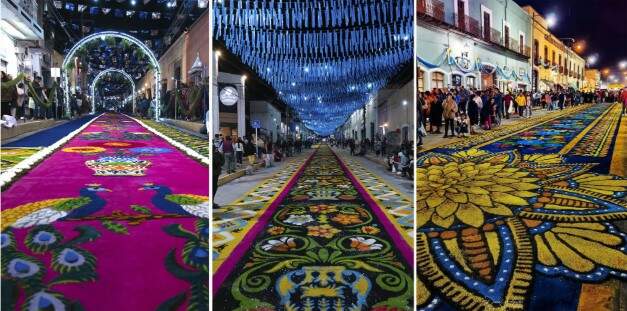
This centuries-old tradition is known as La Noche que Nadie Duerme, “The Night When No One Sleeps.” It’s the signature event of the month-long Huamantla Fair and honors the Virgen de la Caridad, the Huamantla’s patron saint. By midnight, more than 7 k of vibrant, intricate carpets transform this Pueblo Mágico in Tlaxcala.
Beginning in the afternoon, master artisans work alongside the community, creating the tapetes. Each neighborhood and family contributes its own design. Geometric patterns, religious images, and local symbols appear in meticulously created images made of sawdust, as well as seeds, sand, and flowers.
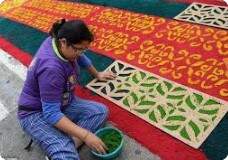 The alfombras or tapetes take six to eight hours to complete. Nearly 900 families help create them each year.
The work begins months earlier, with planning designs and selecting materials. Created as an offering to the Virgin, the intricate works of art exist for just one night before disappearing forever.
After a midnight mass, the Virgin’s image leaves the basilica and begins a six-to-nine-hour procession winding through the streets. The carpets create a path to honor and guide the saint back to her sanctuary. Music, prayers, and songs follow her through the night. As her carriage passes, thousands of devotees follow, their footsteps slowly brushing away every carefully crafted design. By dawn, the tapetes have disappeared. Until next year.
Watch this video to see the artistry behind the tapetes and the procession that follows.
Did You Know? In 2022, Huamantla set a Guinness World Record for the longest sawdust carpet, measuring 3,932 m. long and 1.98 m. wide. It was created by more than 240 artisans using 80 tons of colored sawdust.
Leave a Reply