
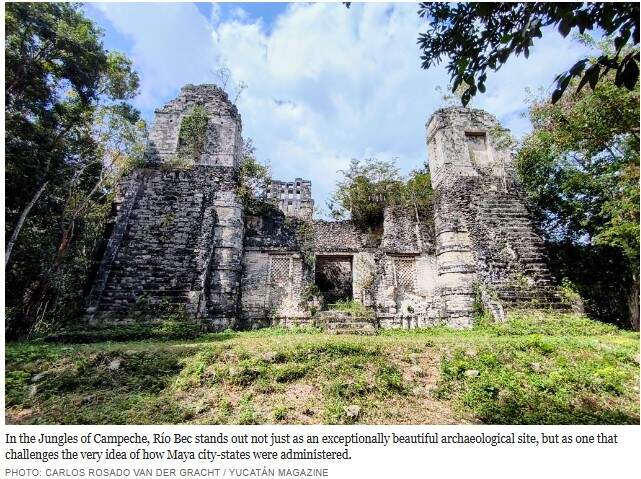
Though the extraordinary archaeological site of Río Bec is only 15 km (9.3 miles) from the highway, in the dense jungle of southern Campeche there is no such thing as a straight line!
Once at the archaeological site of Río Bec, it is rather surprising to see the preserved state in which its remains lie. This is thanks to the efforts of the ejido members and archaeologists, who keep the jungle from swallowing these ancient structures up once again.
Río Bec was documented by French explorer Maurice de Périgny in 1908. A few years later, in 1912, an expedition by Robert E. Merwin and Clarence L. Hay discovered more structures, including what they called the “best preserved building found in the region” (now known as Structure 6N-1 in Group B).
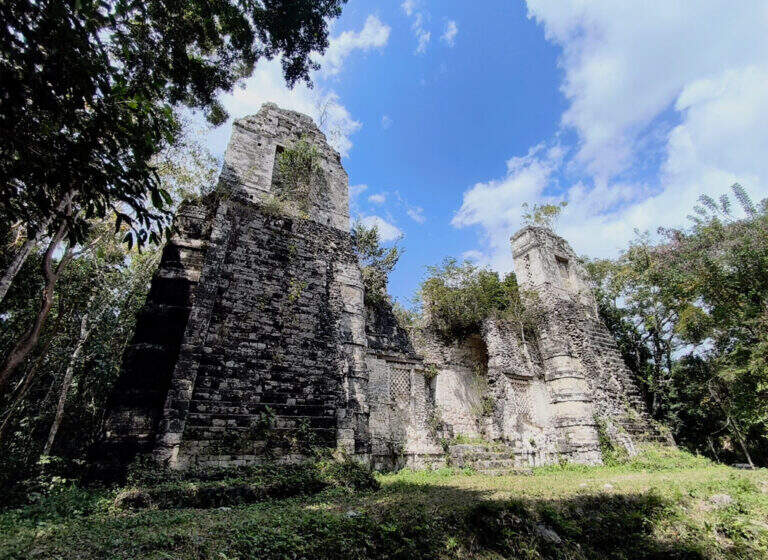
The most extensive research project to date at Río Bec was carried out by a team of Mexican, French, and Canadian archaeologists between 2002 and 2010. The project, led by Dominique Michelet and Marie-Charlotte Arnauld, mapped the settlement and studied its unique architecture and sociopolitical organization.
Why Río Bec Is So Unique
Evidence indicates the Río Bec region was first occupied around 600 B.C.E. during the Middle Preclassic period. During the fifth century C.E., Río Bec underwent a major construction boom, resulting in the erection of most of the structures visible at the site today.
Río Bec is most famous for its distinctive architectural style, which is seen emulated at other sites in the region. The Río Bec aesthetic is closely related to the Chenes style found further northwest. However, it also possesses unique traits of its own, possibly influenced by the Petén style of major centers like nearby Calakmul and its perennial rival, Tikal.
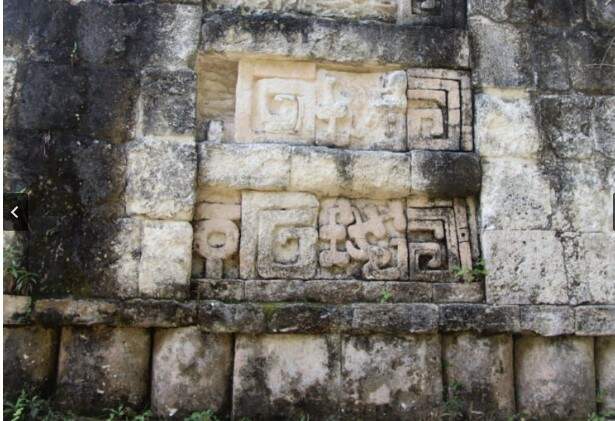
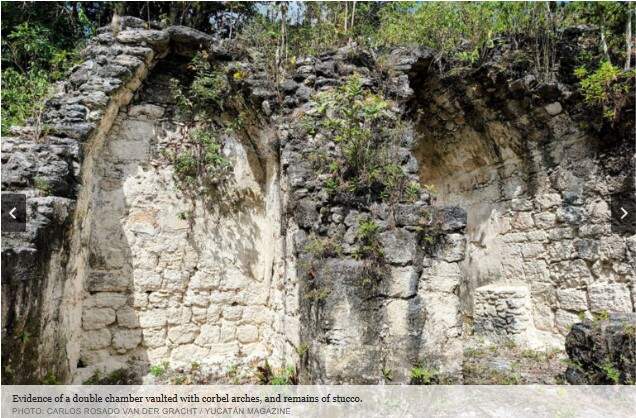
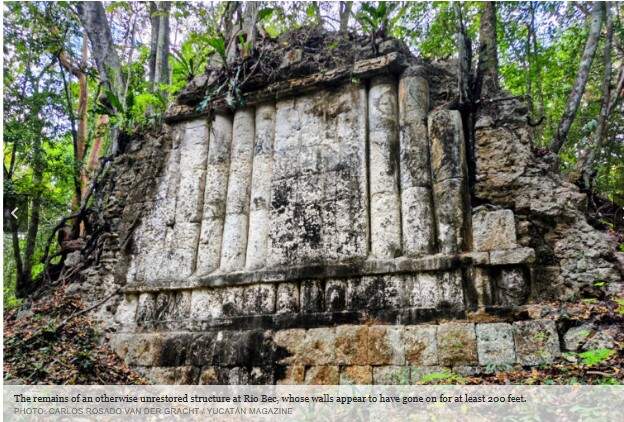
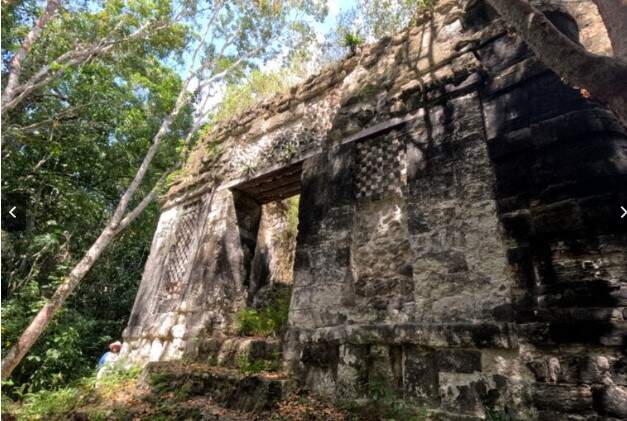
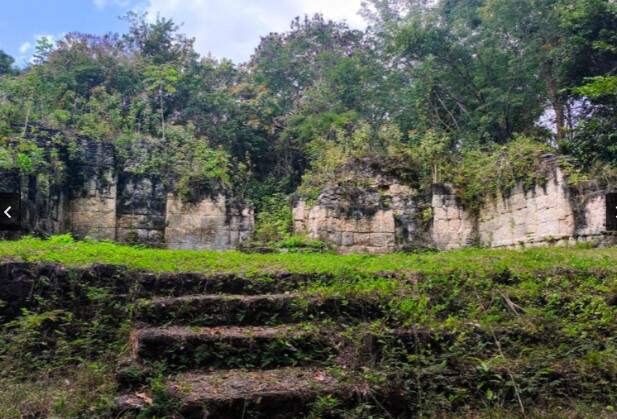
The most iconic feature of Río Bec architecture is the construction of twin towers at the ends of long, range-type buildings. These towers are designed to resemble steep, classic Maya temple pyramids, complete with false staircases climbing their sides and a false temple at the summit. In reality, they are solid masonry cores with no interior rooms, and their stairs are too steep and narrow to be functional. Purely decorative, they were intended to create an impressive and visually commanding façade
Archaeologists like Celine Gillet believe the main structures in these groups were likely the residences of a type of “noble peasant” or elite farmer, pointing to a complex network of nobles and commoners rather than a traditional monarchy. The result is a patchwork of interconnected plazas and structures that were not organized as such and developed in a somewhat post-hoc fashion.
Felix Kupprat observes that evidence for a similar socio-political organization can be observed at the relatively nearby site of Xpujil, a site with which Río Bec also shares several features. Understood in this sense, Río Bec is not a discrete ancient city, but rather a collection of socially and politically intertwined settlements with constructions of varying sizes.
This decentralization is extremely important, as it challenges commonly held assumptions about the rigidity of social-political organization, not just in the Maya region but across Meso-America, forcing researchers to avoid simply assuming the rule of kings or uncompromisingly hierarchical structures of governance.
If You Go
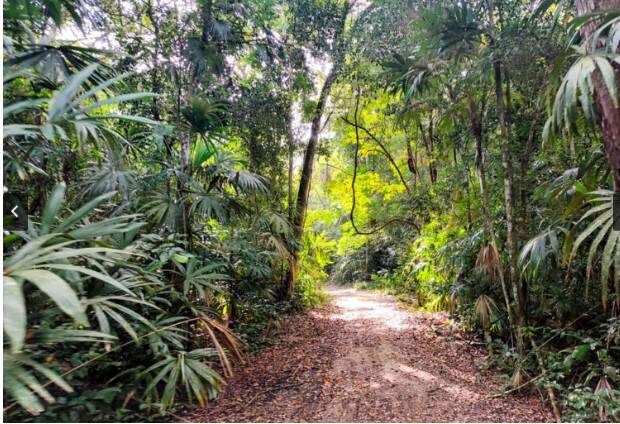
The journey to Río Bec begins in the community of 20 de Noviembre, where one must register with local authorities (at least a few days in advance) and rent a 4×4 truck or an ATV, along with the services of a guide. Attempting the journey without a deep understanding of the jungle path could be described as absolute folly, or even perhaps hubris. This point can’t be emphasised enough.
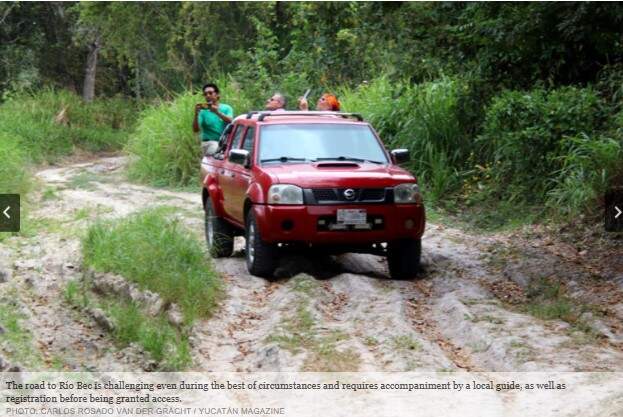
The ability to make the journey is also largely weather-dependent. After heavy rains, the paths become too muddy to traverse safely. Bring some extra food and water, just in case.
Once the journey begins, the first few kilometers are easygoing. However, it quickly turns into a bumpy ride that requires constant attention to hanging vines, potholes the size of craters, tree trunks, and the crossing of wild animals.
There are a handful of hotels ranging from the extremely rustic to luxurious in nearby Kohunlich and the community of Francisco Villa, as well as a couple of restaurants. Keep in mind that there are no ATM’s nearby and that most places only accept Mexican pesos.
If you are interested in visiting Río Bec or any of the other fascinating Maya archaeological sites, please email [email protected] for information on personalized tours.
 — by Carlos Rosado van der Gracht
Leave a Reply