
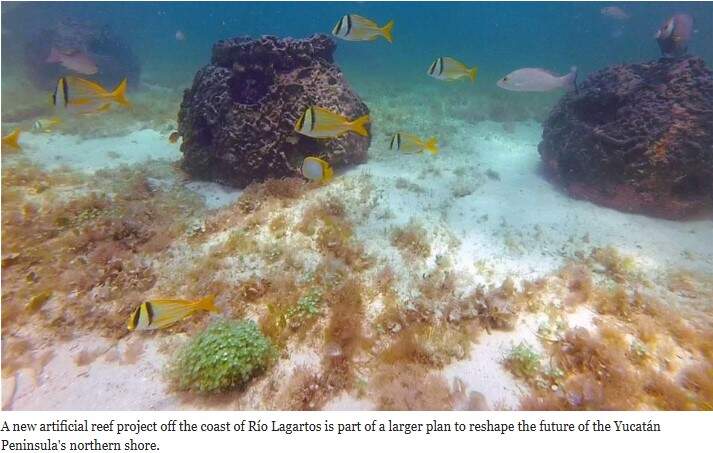
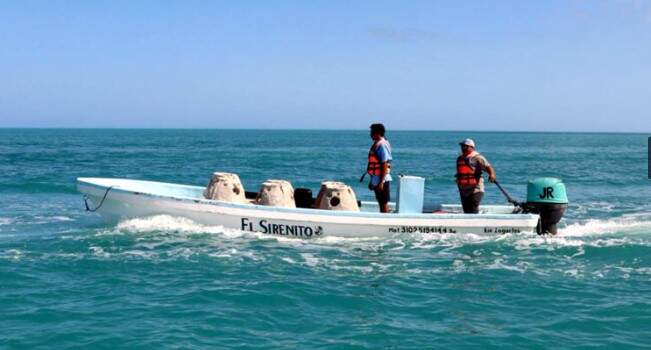
A first-ever artificial reef project sank 30 concrete structures three miles (4.8 kilometers) off the coast of Río Lagartos in late February. The effort marks the opening move in a broader plan to reshape the future of the Yucatán Peninsula’s northern shore in environmental, fishing, and tourism.
Officials from the Secretaría de Pesca y Acuacultura Sustentables de Yucatán — Sepasy, or the state fisheries and aquaculture agency — led the inaugural deployment. The structures were placed in a pre-selected zone chosen for its seafloor stability and minimal ecological disruption. “The challenge is to keep organizing ourselves to increase actions in favor of marine life and abundance,” said Lila Frías Castillo, Sepasy’s secretary.
The structures are designed to attract marine species — particularly grouper, octopus, and spiny lobster — by mimicking natural reef conditions. As organisms colonize the surfaces, a self-sustaining underwater habitat takes shape.
The technology itself comes with a track record. The project is built around the Reef Ball system — dome-shaped, pH-neutral concrete modules with openings that allow water and marine life to pass through freely. The Reef Ball Foundation, an international nonprofit, has deployed more than one million such structures in over 80 countries. The approach has been used to restore coral reefs, improve fisheries, and build snorkeling and diving sites around the world.
Officials are projecting that snorkeling will be possible at the site by summer 2026, once fish begin colonizing the structures and the natural process of marine settlement takes hold. For a town already known for its pink flamingos and wildlife tours, the reef could open an entirely new attraction.
The Ría Lagartos Biosphere Reserve — the estuary system surrounding the town — was designated a UNESCO Ramsar wetland in 1986 and is home to the largest nesting colony of Caribbean flamingos in North America. Adding a marine attraction offshore could broaden the area’s appeal well beyond birdwatching, drawing underwater enthusiasts who don’t currently have much reason to make the trip.
Artificial Reef Ball Fast Facts
- First deployment: 30 structures placed 3 miles (4.8 km) offshore, February 2026
- Planned total: up to 500 structures along the Río Lagartos coast
- Target species: grouper, octopus, spiny lobster
- Technology: Reef Ball system — hollow, pH-neutral concrete modules with ventilation openings
- Lead agencies: Sepasy, Secretaría de Desarrollo Sustentable, Conanp
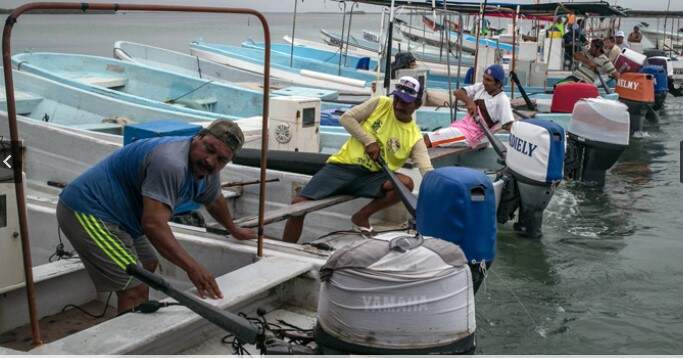
- Community role: Local fishing boats used for transport and deployment
- Timeline: Snorkeling access expected by summer 2026
Leave a Reply