
 When the 2025 Atlantic hurricane season officially ended, we breathed a collective sigh of relief. For the first time in five years, the Peninsula had escaped relatively unscathed from the annual six-month gauntlet of tropical weather that typically brings anxiety to coastal communities from Celestún to Tulum.
The final tally told an unusual story: 13 named storms formed across the Atlantic basin, just one below the average of 14. But the numbers masked a season of striking contradictions—long periods of eerie calm punctuated by bursts of explosive intensity, including three Category 5 hurricanes that tied 2005’s record for the second-most powerful storms ever recorded in a single season.
 “This was the most tranquil season we’ve experienced since 2020,” said Juan Antonio Palma Solís, a meteorologist with Meteored México who tracked the season’s evolution from the first formation in June through Hurricane Melissa’s devastating rampage across Jamaica and Cuba in late October. “But it only takes one storm to change everything. We were fortunate this year—others were not.”
The Atmospheric Plot Twist
Early predictions for 2025 painted a very different picture. In April, Colorado State University’s renowned forecasting team called for 17 named storms, nine hurricanes, and four major hurricanes. NOAA followed suit in May, predicting an above-normal season based on two key factors: exceptionally warm Atlantic Ocean temperatures and the expected arrival of La Niña.
La Niña, a cooling pattern in the Pacific Ocean, typically acts as an accelerant for Atlantic hurricane activity. The phenomenon weakens upper-level winds that would otherwise tear developing storms apart—a process meteorologists call wind shear. From 2020 through 2024, La Niña conditions helped fuel some of the most active hurricane seasons on record, with an average of 21 named storms per year.
“Everyone expected a similar pattern in 2025,” Palma Solís explained. “The ocean temperatures were there. The ingredients were in place. But the atmosphere had other plans.”
What happened instead was a masterclass in atmospheric unpredictability. The crucial upper-level winds—the ones that La Niña was supposed to suppress—remained unusually strong throughout much of the peak season from August through October. These persistent winds acted like nature’s storm suppressors, performing three critical functions: preventing new cyclones from organizing, weakening systems that did manage to form, and steering hurricanes away from the Caribbean and Gulf toward the open Atlantic.
“That’s why most of the formations we saw happened far from our region,” Palma Solís said. “The storms that did develop were being pushed out to sea.”
The forecasters weren’t entirely wrong—La Niña did eventually arrive. But its late appearance meant those disruptive winds never weakened in time to unleash the activity everyone anticipated during the traditional peak months. Had La Niña established itself earlier, as predicted, meteorologists agree the season would have unfolded very differently, potentially threatening the Yucatán coast with far more systems.
When Intensity Trumps Quantity
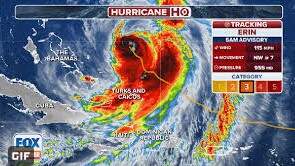 While the total number of storms ran below recent hyperactive years, 2025 proved that quantity isn’t everything. The season generated 133 units of accumulated cyclone energy—a metric that measures not just how many storms form, but how strong they become and how long they last. That above-normal rating earned 2025 a spot among the more intense seasons of the past two decades.
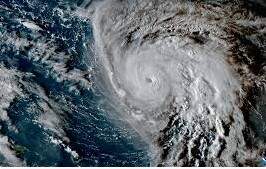
Four storms strengthened into major hurricanes of Category 3 or higher, exceeding the average of three. More remarkably, three of those—Erin, Humberto, and Melissa—exploded into Category 5 monsters with sustained winds exceeding 157 mph (252 kph). Only the catastrophic 2005 season, which produced Katrina, Rita, and Wilma, has seen more Category 5 hurricanes in a single year.
Melissa stands out even among that elite company. When it slammed into Jamaica on October 28 with 185 mph winds and a barometric pressure that tied the 1935 Labor Day Hurricane’s record, it became the third-most intense Atlantic hurricane ever recorded at landfall. Dropsondes—instruments dropped from hurricane hunter aircraft—measured a wind gust of 252 mph at just 657 feet altitude, breaking the previous world record set by Typhoon Megi in 2010.

The storm’s path of destruction was staggering. In Jamaica’s Black River community, 90% of roofs were destroyed. Some 25,000 people crowded into emergency shelters, and 77% of the island lost electricity. In Haiti, a flash flood from a burst river killed 20 people in a single town, including 10 children. Cuban authorities evacuated more than 735,000 residents before Melissa made a second landfall as a Category 3 near Santiago de Cuba.
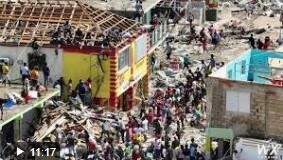
“For Jamaica, this will be remembered as the storm of the century,” said Anne-Claire Fontan, a tropical cyclone specialist with the World Meteorological Organization, surveying the wreckage days after the hurricane passed. Climate scientists analyzing Melissa later concluded that human-driven climate change, which has raised ocean temperatures to unprecedented levels, intensified the hurricane’s destructive winds and rainfall beyond what would have occurred in a cooler world.
A Reprieve, Not a Trend
 For those living in Yucatán’s beach communities or Mérida’s newly flood-prone neighborhoods, the quiet season offered welcome relief from years of heightened anxiety. The Peninsula has experienced its share of close calls in recent years, and many residents have invested in storm shutters, emergency supplies, and evacuation plans that thankfully went unused this year.
But Palma Solís cautioned against reading too much into a single calm season—or attributing it to long-term trends like climate change. “This difference isn’t because of climate change or so-called climate engineering,” he emphasized, referencing conspiracy theories that occasionally surface during unusual weather patterns. “It’s natural atmospheric variability. The atmosphere is complex, changeable, and fundamentally non-linear. We can make predictions, but it remains unpredictable at its core.”
The good news for places like Yucatán is that storm tracking once a hurricane actually forms has become increasingly accurate. The National Hurricane Center’s incorporation of artificial intelligence into forecast models this year helped forecasters issue warnings up to 72 hours in advance, giving coastal communities more time to prepare than ever before.
The Bigger Picture
Stepping back from the daily storm tracking, the 2025 season revealed something important about the new normal in the Atlantic. Nine of the past 10 hurricane seasons have been classified as either above-normal or extremely active by NOAA standards, with only 2022 breaking the streak as a “normal” year. Sea surface temperatures in hurricane breeding grounds remain at near-record levels, and climate scientists expect that warming trend to continue as greenhouse gas concentrations rise.
That warmer baseline means that when conditions do align for active hurricane development—when La Niña arrives on schedule, when wind shear diminishes, when atmospheric moisture increases—the storms that form will have more energy to draw upon. Melissa offered a preview: a hurricane that drew exceptional strength from abnormally warm Caribbean waters and rapid intensification that challenged even modern forecasting systems.
For Yucatán, the quiet 2025 season was a gift, but hardly a reason for complacency. The Peninsula sits in one of the world’s most hurricane-prone regions, where a century of henequen prosperity was built despite—and sometimes destroyed by—the tropical cyclones that have always menaced these shores. The grand haciendas that dot the Yucatecan landscape, some now restored to their former glory, survived not through luck but through solid construction and respect for the power of nature.
“The lesson from this season is clear,” Palma Solís said. “It doesn’t matter how many storms are predicted or how many actually form. We must never let our guard down. The next season could be entirely different, and all it takes is one storm heading in the wrong direction to change everything.”

Leave a Reply