
Itinerary
Friday
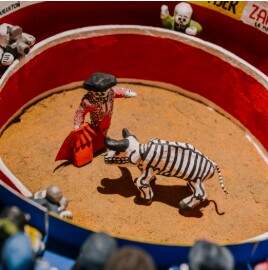 Museo de Arte Popular 3 p.m. Experience Mexico’s living cultural diversity
Many visitors make their first stop at the National Museum of Anthropology (entry for foreigners, 210 pesos, or about $11.80), which offers an encyclopedic view of Mexico’s pre-Columbian civilizations. While the anthropology museum situates Mexico’s first peoples in the past, the Museo de Arte Popular, or Folk Art Museum (60 pesos), in an Art Deco former fire station near the Alameda Central park, focuses on Mexico’s kaleidoscopic material cultures as they persist into the present. It is also one of several lesser-known arts institutions in this part of the Centro — a district including much of the city’s UNESCO-protected Historic Center — like the Laboratorio Arte Alameda (45 pesos), dedicated to the intersection of art and technology, and the photography-focused Centro de la Imagen (free), in a turn-of-the-19th-century cigar factory turned military prison.
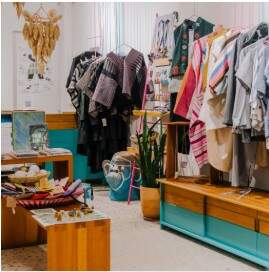
The eastern stretch of la Juárez has seen a recent explosion of lively boutiques centering Mexican art and design. Shops like Pingüino, Fábrica Social and Utilitario Mexicano specialize in crafts and objects made with local materials and traditions — from handmade textiles and ceramics to enamelware and kitchen supplies — while the multibrand Casa Dinamarca showcases contemporary clothing by young designers from across the country. A clutch of intimate storefronts, mostly clustered along Calle Marsella, highlight the work of individual brands, like the perfumery Xinú, ensconced in a half-hidden garden; 1/8 Takamura, where architectural garments draw on the designer Guillermo Vargas Ayluardo’s Japanese ancestry; Gramo, with its slick selection of glasses; and Campillo/Varon, where amorphous accessories by the jewelry maker Aaron Changpo share space with slinky men’s wear by the award-winning designer Patricio Campillo.
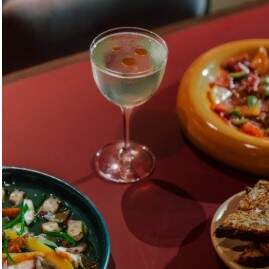 6:30 p.m. Drink local
While best known for agave distillates like tequila and mezcal, Mexico is also home to compelling craft beers and a growing number of high-quality natural wines. For the latter, stop for a street-side glass at Fantasma, a closet-size wine bar that opened in la Roma in June 2024, where by-the-glass pours, starting at 180 pesos, highlight local labels like Radicante, Figura and Silvana Pijoan.
Farther south, in la Condesa, Lagerbar Hércules serves some of the country’s most accomplished craft beers from the Hércules brewery in the city of Querétaro, three hours north (roughly 12-ounce pours from 90 pesos). For an excellent cocktail (from 190 pesos) — or meal — amid a cozy clash of earth tones, try newly opened Alboroto, run by the talented young chef Xarem Guzmán.
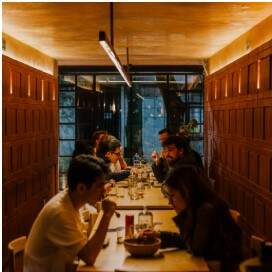 8:30 p.m. Expand your vision of Mexican cooking
Few Mexico City restaurants are as refreshing as la Condesa’s Gaba, open since 2023. On a given night, the chef Victor Toriz might serve ribbons of chayote slicked with fava-bean-and-anchovy sauce (260 pesos) or hulking, shareable pork chops with roasted pineapple (980 pesos), an irreverent nod to tacos al pastor. While critics fret over declining “authenticity” in the city’s food scene , Mr. Toriz makes food that is decidedly local, technically ambitious and giddily agnostic in its influences. For more traditional flavors at an equally exacting level, try tongue enmoladas (stuffed, mole-bathed tortillas, 285 pesos) or shredded-fish-stuffed infladitas (puffed masa roundels, 180 pesos) from the chef Oscar Barba Montero’s new dinner menu at Comal Oculto in la San Miguel Chapultepec.
 10:30 p.m. Go dancing
Grab a drink at la Roma’s Drama Radio Bar, where D.J.s from Mexico’s diverse and inclusive electronic-music scene play for live broadcast on a community radio station. A few blocks away, Club San Luis is an old-school standby in la Roma for live salsa bands until 4 a.m. (cover, 250 pesos). Farther afield, in the working-class Obrera neighborhood, Barba Azul features live music in genres like danzón and tropicália in a dark grotto of a room that looks like something from a David Lynch film (no cover, but obligatory tip for door staff upon leaving). Increasingly popular among visitors, Barba Azul has transformed radically since opening in 1950, but local couples still flood the dance floor on weekend nights, using every tight spin and deep dip to claim their space.
Saturday
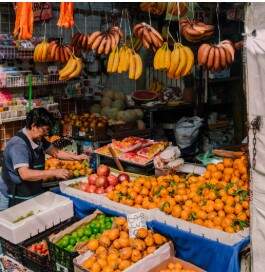 La Merced 10 a.m. Navigate a dizzying market
When Mexico City was still the Aztec capital of Tenochtitlan, the district of La Merced, in the southeastern edge of the Historic Center, served as a dock for goods from the mainland. There’s no water anymore, but with its thousands of informal vendors and 11 or so covered markets, La Merced still feels like a port: raucous, heady and overwhelming. To avoid getting lost, the best way to visit is over a roving breakfast with Eat Like a Local, a small tour operator that directs part of its proceeds toward educational programming for young women in the neighborhood. The company’s flagship, four-hour walk ($120 per person) covers both La Merced and the Mercado Jamaica flower market, but it can organize shorter, custom tours focused on this Mexico City landmark.
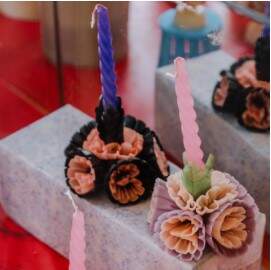 1 p.m. Immerse yourself in art and craft in the Historic Center
Walking from La Merced to the spectacular ceremonial plaza known as the Zócalo, stop at Cerería de Jesús for handmade beeswax candles (24 pesos) and the Ex-Teresa Arte Actual (free), a museum set in a precipitously tilting former convent. From there, traverse the sunken ruins of the Aztec Templo Mayor (100 pesos) en route to the new flagship shop for FONART, the National Fund for the Development of Crafts, and, around the corner, the moving works of José Clemente Orozco at the Colegio de San Ildefonso (50 pesos), widely considered the birthplace of Mexican muralism. Finally, take in Diego Rivera’s dynamic suite of paintings — ranging from romantic depictions of Mexican folkways to giddy gibes at capitalist excess — in the former Secretariat of Public Education, open since 2024 as the Museo Vivo del Muralismo (free).
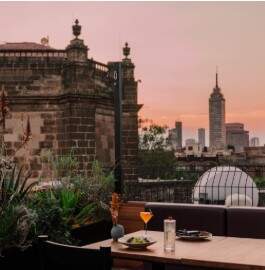 4:30 p.m. Sip a cocktail with a view
Opened in April 2025, the restaurant Charco, on the roof of the new, kid-friendly Museo del Cacao & Chocolate, overlooks the domes and buttresses of the Metropolitan Cathedral. Charco’s kitchen, run by the Chilean chef Ricardo Verdejo, turns out an inventive, seafood-heavy menu with a strong program of cocktails, mezcals and natural wines (cocktails from 190 pesos, dinner for two about 1,500 pesos, without drinks). On a clear day — admittedly few and far between — the twin volcanic peaks of Popocatépetl and Iztaccíhuatl might appear on the horizon, but sunsets are spectacular in any weather. For a low-key drink with a bit of history, try one of the neighborhood’s classic cantinas like El Gallo de Oro (beers from 65 pesos), open since 1874 with décor that’s practically unchanged since the 1970s.
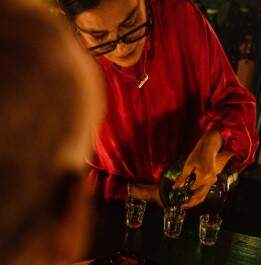 7 p.m. Enjoy rare mezcals
In 2022, after almost six years of collecting rare agave distillates across Mexico, the food writer Natalia de la Rosa and photographer Jason Thomas Fritz opened one of the city’s best tasting rooms, Ahuehuete, in the Historic Center. Receiving six visitors at a time, the owners pour a diverse range of high-quality spirits purchased from producers in remote villages from the highlands of Sonora to the tropical hills of Guerrero and the volcanic valleys of Michoacán. Two-hour tastings, $90, include at least six pours of mezcal that paint an incomparable picture of Mexico’s cultural and ecological diversity. For a more self-guided experience, Bósforo, also in the Centro neighborhood, remains the city’s standard-bearer for agave spirits and experimental music — still sexy and surprising more than 15 years after opening (one-ounce pours from 80 pesos).
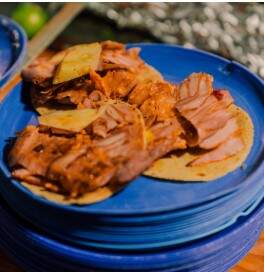 10 p.m. Indulge in a late-night snack
In Mexico City, where lunches stretch well into the evening, late-night provisions, often served under fluorescent lights and a halo of smoke, make a common replacement for dinner. Options abound. Café La Pagoda, one of the Historic Center’s venerable cafés de Chinos — coffee shops opened by Chinese immigrants beginning in the 1930s — turns out enchiladas (149 pesos) and chilaquiles (94 pesos) 24 hours a day, the same punishing schedule kept at Caldos de Gallina Luis in la Roma, known for its warming bowls of chicken soup (from 65 pesos). In the Narvarte neighborhood, Tacos Tony turns out fragrant tacos de suadero (32 pesos), a block from El Vilsito, a mechanic’s shop by day and taquería by night, serving marbled petals of pastor (27 pesos) until 5 a.m.
Sunday
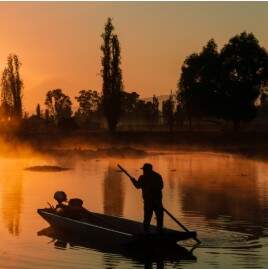 Xochimilco 5:30 a.m. Watch the sunrise on the water
At dawn, mist rises off the canals in Xochimilco, a historic district that contains some of the last remnants of the lake Mexico City was built on. Several groups offer sunrise excursions through the canals, including the organic farm Arca Tierra (from 990 pesos per person), but the most enriching visits are organized by Santuario Ajolote, a civil society group that works with local guides and uses proceeds for environmental and community activism. (Take a car to Xochimilco; at this time, about 30 minutes from the city center.) Early-morning trips (1,350 pesos per person) include breakfast with fourth-generation farmers on a working chinampa, the ancient agricultural system developed here in the Valley of Mexico. For those who prefer to sleep in, Santuario Ajolote also offers by-the-hour tours through Xochimilco’s lesser-known backwaters (750 pesos per hour). English-speaking guides are best arranged in advance.
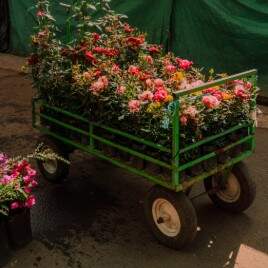 10 a.m. Stroll through a miniature Eden
Aside from its canals, Xochimilco is also famous for its plant nurseries, or viveros. At the Mercado de Plantas y Flores de Cuemanco, long, straight aisles, orderly as the urban fabric of a Renaissance model city, overflow with euphorbias and philodendrons, cactuses and agave, ferns and citrus. Here and at nearby nurseries like Madreselva, both native and exotic plants thrive in Mexico City’s mild climate — living evidence of the extraordinary fertility that has nourished civilizations here for millenniums.
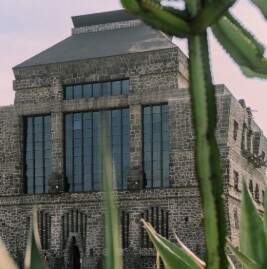 11 a.m. Explore an enigmatic museum
Diego Rivera conceived of the Museo Anahuacalli (130 pesos) to house his expansive collection of pre-Hispanic art in 1933. Completed 31 years later as an eccentric, sepulchral temple, the basalt-clad structure was designed by Rivera and the visionary builder Juan O’Gorman. The same architect, in 1931, designed a home and studio for Rivera and Frida Kahlo, now a museum (30 pesos), and 20 years after that, the soaring, mineral-based mosaic that covers the library stacks at the National Autonomous University of Mexico (free). An elegant cluster of buildings for Anahuacalli’s archives, designed by the architect Mauricio Rocha, opened in 2021. Levitating over a half-wild garden of native plants and volcanic bedrock, Mr. Rocha’s annex represents a tangible through line between the city’s ancient past and its dynamic, inventive present
Leave a Reply