
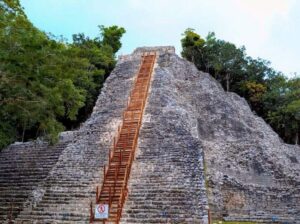
 INAH has installed a new wooden stairway to conserve Cobá’s largest structure while still allowing visitors to climb the ancient temple. “The installation of the wooden stairway at Cobá is part of a project to improve the site’s infrastructure while maintaining its ancient heritage,” said a press statement released by INAH.
The reception to the new stairway has been generally positive, as visitors are happy to be able to climb the structure. Yet, the new wooden stairway is not without its critics, including Marco Can of Quintana Roo’s state university, who argues that the staircases ultimately do more harm than good. He contends that their design concentrates pressure on just a few points of the structure rather than spreading it out.
Some have suggested that a better approach on social media would be to follow the lead of sites like Tikal and build staircases adjacent to the structures. Besides the structural concerns expressed by Marco Can, this alternative would also have a lesser impact on the aesthetics of the ancient buildings.
Known as Nohoch Mul, the 42-m. (140-ft) step pyramid is the tallest in Quintana Roo and one of the few climbable structures of its size near the Riviera Maya.
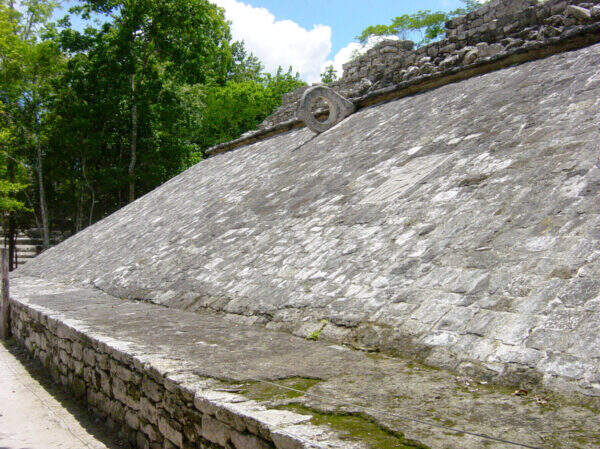
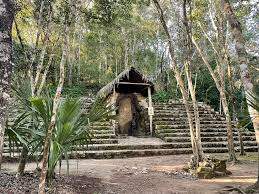
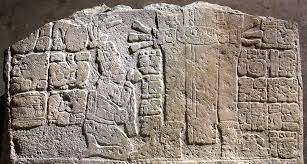
Aside from Nohoch Mul, Cobá is home to several other impressive structures, including a ballcourt, an observatory, other step pyramids, and myriad fascinating stelae that preserve the city’s history in stone.
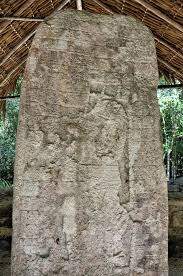
Since the opening of a new highway from Tulum, the number of visitors to Cobá has increased dramatically, as the site is now just 45 min. from the Riviera Maya.
The history of Cobá began in 100 B.C.E., when it was founded by the Maya peoples, who likely originated from the Petén region. The city declined around 1450 C.E., having peaked between 800 and 1000 C.E. At its height, Cobá experienced a population boom, constructed several of its most famous temples, and became one of the richest and most important cities on the Yucatán Peninsula.
Cobá became so powerful that under the rule of Lady K’awiil Ajaw, it was able to invade Yaxuná, despite that city’s proximity to the military and political powerhouse of Chichén Itzá. Lady K’awiil Ajaw was so determined to maintain control over Yaxuná that she ordered the construction of a 100-kilometer (60-mile) straight road, or sacbé, 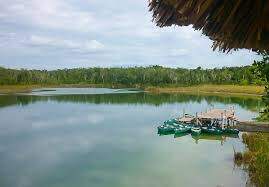 connecting her city to its new vassal.
As impressive as Cobá is, visitors must use their imagination to picture the site at its peak, complete with fully stuccoed and painted temples and bustling markets. Unlike the more centralized and compact Chichén Itzá or Uxmal, Cobá is a vast, diffuse city spread over 80 square kilometers, with lakes as its core.
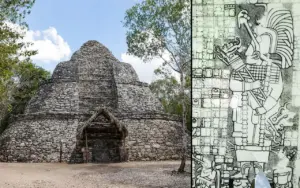
Cobá has currently also been making headlines for the recent decipherment by epigraphers of hieroglyphic texts that tell of the foundation of the city, as well as the rule of one of the Maya world’s most famous Queens, Lady Ix Ch’ak Ch’een.
One of the most unique aspects of Cobá as a tourism destination is the opportunity to explore the site by bicycle. The only downside is that the rental bikes are fairly old and have poor shock absorbers, which makes for a bumpy ride.

Leave a Reply