
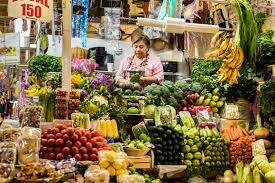
 Produce in Mexico tastes so much more like itself, even though American fruits and vegetables often look like something out of a commercial. Why is that? Is it the climate? The soil? A closer look at the regulatory policies of both countries gives us some clues.
Europe and Latin America maintain stronger regulatory safeguards and stricter food-safety standards than the U.S. due to one major difference in policy: The European Union’s regulatory body, the European Food Safety Authority (EFSA), takes a precautionary approach, so if a food or agricultural product’s safety is not definitively clear, it can be banned or restricted until it’s proven safe. The U.S. Food and Drug Administration and the United States Department of Agriculture, however, generally take a more risk-based approach, allowing food products on the market until harm is proven. The USDA allows food manufacturers to determine the safety of certain food additives without FDA preapproval.
 The EFSA, for example, bans or refuses approval for hundreds — in some estimates, over a thousand — agricultural products and chemical food additives under this principle, many of which are legal in the U.S. This list includes toxic pesticides, synthetic hormones, growth antibiotics and artificial dyes linked to cancer and hyperactivity in children.
Consider the recent case of paraquat, a pesticide manufactured in China but banned for use there because of its toxicity. Despite clear evidence linking it to Parkinson’s disease and other severe health issues, the U.S. recently ruled it permissible for agricultural use. The logic is not logical: it’s too dangerous for Chinese farmers in the country that exports it, but acceptable for Americans.
So where does Mexico fit into this story?
Mexico’s regulatory framework reflects a different set of priorities. In many respects, it protects public health significantly more than the U.S. does. The country has banned 183 highly hazardous pesticides that remain authorized in the U.S. In 2025, it went further, prohibiting an additional 35 toxic pesticides, including aldicarb, carbofuran, and endosulfan — all of which are still used in American agriculture.
Mexico is also phasing out glyphosate (the controversial herbicide linked to everything from cancer to neurological disorders), though slowly and under pressure from U.S. trade negotiators. Beyond pesticides, Mexico bans recombinant bovine growth hormone (rBGH), used widely in American dairy; chlorine-washing of chicken, a standard U.S. poultry practice; and several synthetic food dyes linked to behavioral issues in children.
Even preservatives tell a story: BHA and BHT — common in American processed foods despite links to cancer — are banned in Mexico. Potassium bromate, still found in U.S. baked goods, is illegal in Mexican bread.
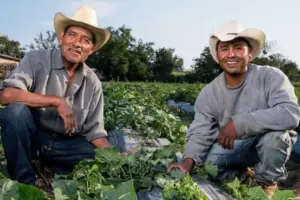 Mexico’s commitment to agricultural reform extends beyond just “banning the bad stuff.” The country and its regulatory bodies have embraced organic and agroecological farming with enthusiasm. With 246,899 hectares of certified organic land, Mexico ranks as one of the largest organic food producers in the world. Its organic standards are rated much stronger than American standards in terms of sustainable management. To be fair, Mexico still permits 140 highly hazardous pesticides that are banned elsewhere. And regulatory enforcement can be inconsistent across regions.
 The Mexican vision of agriculture prioritizes small-scale farming (70% of Mexican farms are only five hectares or less) and sustainable methods over the large-scale industrial operations and corporate mega-farms that dominate American food production. The result is an agricultural culture that values flavor, biodiversity and ecological balance as much as yield.
Meanwhile, the U.S. still outperforms Mexico in several areas: consistent monitoring systems, stronger data infrastructure, better farmer training, and advanced technology for precision agriculture. American farms are more efficient, more productive, and better equipped for large-scale distribution. But efficiency isn’t the same as quality; more food doesn’t mean better food.
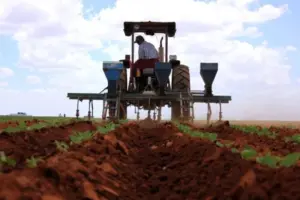 In fact, these industrial farming practices in the U.S. have led to significant declines in the nutritional value of produce due to soil degradation, monoculture (when only one crop is grown versus a seasonal rotation), heavy synthetic fertilizer use and prioritizing crop yield over nutrient density. U.S.-grown fruits and vegetables today contain less protein, calcium, iron, magnesium and vitamins compared to those grown decades ago, with documented drops in nutrient levels in key crops like broccoli and corn.
However, because a greater proportion of Mexican agriculture uses traditional methods —crop rotation, polyculture, conservation agriculture or organic fertilization — soil health and nutrient density are better sustained. The prevalence of small farms in Mexico means that they often maintain higher organic matter and soil fertility compared to intensive crops due to less stripping of native vegetation and more integrated management.
This is about priorities: flavor, nutrition and ecology, health or yield, profit and appearance.
—from an article https://mexiconewsdaily.com/food/when-made-in-america-becomes-a-warning-label-food-safety-in-the-us-vs-mexico/ by Monica Belot medium.com/@monicabelot.
Leave a Reply