
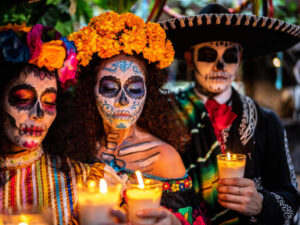
Día de los Muertos or Day of the Dead is a vibrant Mexican holiday. It honors deceased loved ones. It is a celebration about remembering and celebrating life. Ofrendas, colorful altars, created by families, are adorned with marigolds, photos and favorite foods of the deceased loved ones. Sugar skulls and pan de Muerto (bread of the dead) are also traditional treats. In some areas, parades, music and dancing in the streets, create a festive atmosphere. A blend of indigenous traditions and Catholic beliefs combine to create this rich cultural heritage.
Día De Los Muertos is celebrated on November 1st and 2nd. This holiday originated from the Aztec, Toltec and Nahua traditions which viewed death as a natural part of life. Ofrendas or altars are set up in homes and even in some restaurants.
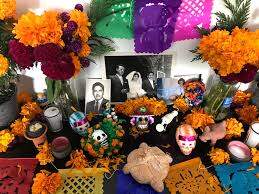 Marigolds, known as cempasuchil, are the traditional flowers. Their bright color and scent are believed to guide the spirits back to the living world. Calaveras or sugar skulls are decorated with colors and often have the name of the deceased on them. Pan de Muerto is a special bread often shaped like bones and dusted with sugar.
Parades feature people dressed as skeletons with lots of face paint and costumes. La Catrina, a skeletal figure, is dressed in elegant clothing and is an iconic symbol of the holiday. Music and dance with mariachi bands and traditional dances are performed in cemeteries and public squares.
Tamales are a common food and are filled with meats, cheeses and chilies. Mole, a rich sauce made with chocolate and spices, is often served. Atole, a warm thick drink, made from cornmeal, is also consumed during this time.
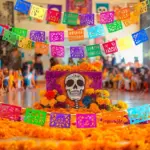
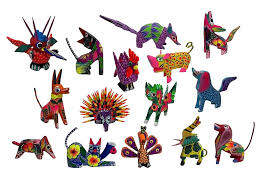 Papel picado are intricately cut paper banners that decorate altars and public areas. Alebrijes, fantastical creatures, either made of wood or papier-mâché are also displayed. Face painting to resemble skulls is a popular, symbolizing the connection between life and death.
Día De Los Muertos is celebrated throughout Mexico, 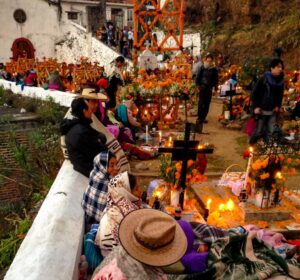 but different areas have unique customs and traditions. Oaxaca celebrates the Night of the radishes, featuring intricate carved radishes. In Michoacan, the island of Janitzio hosts elaborate candlelit ceremonies on the lake and in Mexico City thousands attend the Mega Procession of Catrinas.
Dia De Los Muertos has gained international recognition, influencing culture and celebrations around the world. Many American cities with large Mexican populations, hold public celebrations. The holiday has inspired films like “Coco” and “The Book of Life”
Dia De Los Muertos has been recognized by UNESCO as an Intangible Cultural Heritage of Humanity.
Leave a Reply