
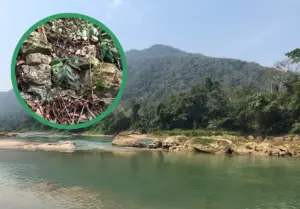
A multi-national team of archaeologists have rediscovered the lost city of Sak-Bahlán, the last known stronghold of the Lakandon Chʼol Maya rebels in the present-day Mexican state of Chiapas.
The Lakandon Chʼol were a Maya people who lived in the Laguna Miramar area until the Spanish conquest, which led to the destruction of their capital city, Lakam-Tun. The survivors founded a new capital known as Sak-Bahlán (meaning “the land of the white jaguar”), hidden in the depths of Lacandon Jungle – where they remained free and independent from Spanish rule for more than 100 years.
The site was first documented in 17th-century chronicles by Friar Pedro de la Concepción, who renamed the city as Nuestra Señora de los Dolores. By 1721, Sak-Bahlán was an abandoned ruin and slowly reclaimed by the jungle.
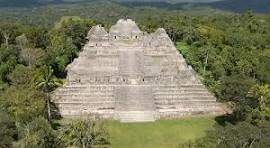 The recent discovery was made during a study using Geographic Information Systems (GIS) in the Montes Azules Biosphere (a protected zone in Lacandon Jungle) by Josuhé Lozada Toledo, a researcher from the National Institute of Anthropology and History (INAH).
Lozada’s approach combined historical sources with modern GIS tools such as ArcGIS Pro. He used the 17th-century chronicles to estimate travel distances and reconstruct ancient trade and communication routes.
Factoring in terrain, vegetation, water sources, and even human load capacity, he developed a targeted map that led the team directly to the suspected site. Excavations during two field seasons have begun mapping the city and defining its historical occupation through test pits and artefact analysis.
The research, funded in part by the Discovery Channel, will be featured in the upcoming documentary Discovering the Hidden Mayan City: Sak-Bahlán.
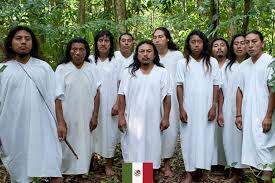

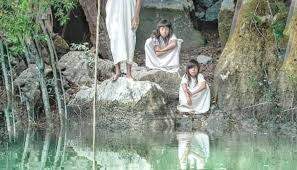
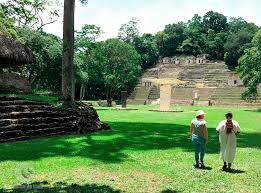
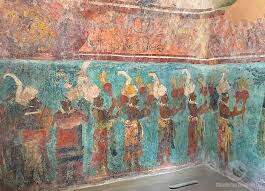
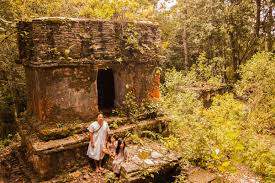
Meet the modern-day Lacandon Mayas. They speak the Lakantun Mayan language and live deep in the Lacandon jungles of Mexico. They stayed hidden during the conquest and survived in the Jungle away from civilization. The Lacandon were rediscovered in the 1900s, but almost were extinct by the 1940s. Today their population continues to dwindle among three villages, with only 630 fluent speakers left. Now the youth of the Lacandons are finding new ways to preserve their culture and traditions.
Leave a Reply